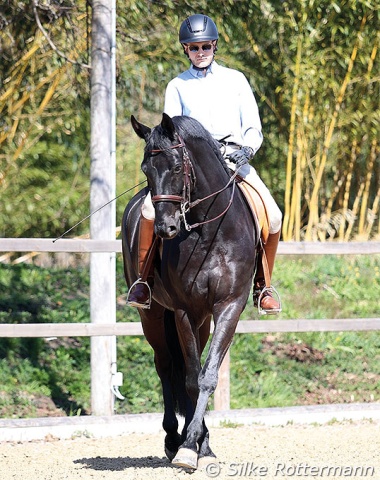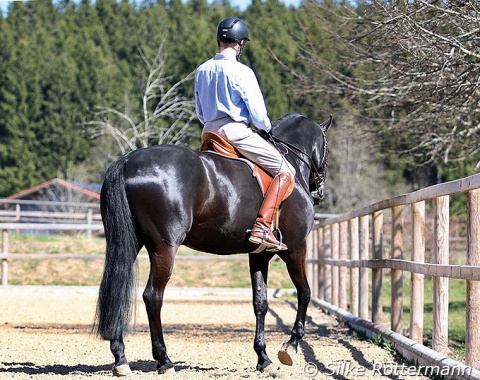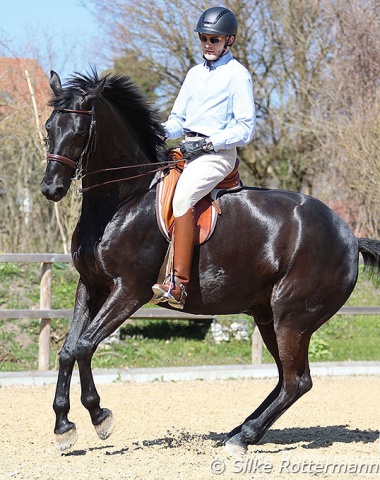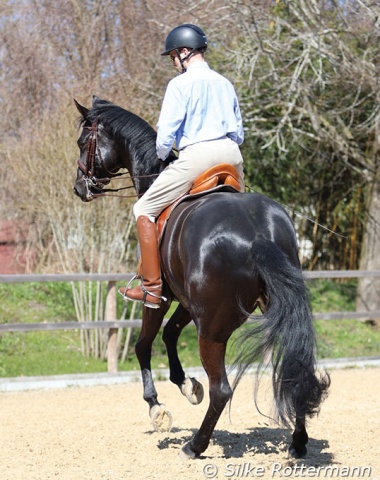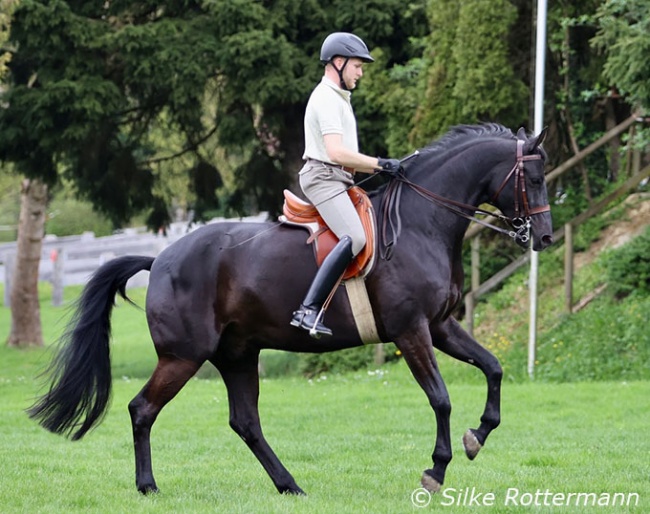
-- by Max Jaquerod, edited by Silke Rottermann © Eurodressage
This article series documents the progress the Swiss warmblood dressage horse Fantastico (by Frascino-Hofrat) is making in his training with Swiss amateur dressage rider Max Jaquerod who strictly trains after classical principles. The series started in June 2023 after „Fanti“ was bought until now.
While I write these lines, the new year has just begun and Fantastico and I are starting into the 4th year of training together.
After more than two years, I can rightfully claim my horse is a model student as his training progressed steadily over these years and we are now in a period where he tackles the level of high collection. Expressed in dressage competition levels Fanti is working on the exercises which are required in the advanced classes, most notably the flying changes in series, canter pirouettes and piaffe and passage which he works on according to his abilities.
Each of them holds its own challenges, but all require a certain degree of collection without they’re perhaps possible, but no more than circus tricks.
In this article I want to feature the challenges Fanti and me encountered while learning and refining the canter movements which we are going to face in the course of the upcoming 2026 season when we plan to debut at advanced level.
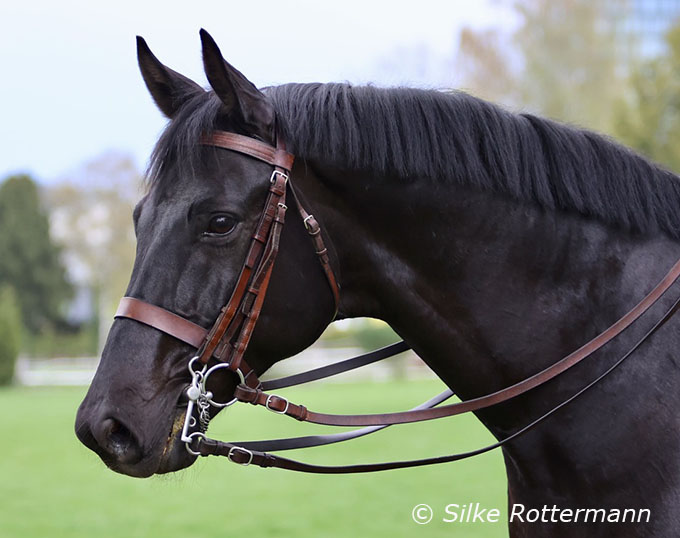
valuable informations about his state of mind
If you want to show these movements correctly, they are always the (more or less) finished products of a very long way, full of „blood, sweat and tears“, namely challenges and setbacks which need to be overcome by systematic training. Two of them I want to illustrate in this article: the flying changes in series and canter pirouettes. It is going to be followed later on by an article about the training of my horse in piaffe.
Flying Changes in Series - With A Clever and Talented Horse
Reading the caption of this part, you might think teaching Fanti the flying changes in series was plain sailing, but for exactly the reason that my horse is clever and apparently has a talent to change leads the opposite had been the case.
I still remember the sunny day in May 2023 when I first tried out Fantastico at the Swiss Army Stables in Schönbühl near Berne. He was a narrow 6-year-old with a basic training and far from the strength and balance of today. During the trial ride Fanti would change the lead with no care in the world when I changed my weight only a fraction in canter. Though this happened due to a lack of balance, he also indicated then that this is something which he can do easily, much in contrary to my previous horse for whom a single change of lead was already such a big challenge.
So some time later, when the Fanti was mine and the basics were safely established, I started to ask single flying changes and it hold no problems. They began a bit later when we started working on flying changes in series.
If you want to ride flying changes in series, you have to begin preparing the horse for the next change of lead as soon as the horse has executed the previous change.
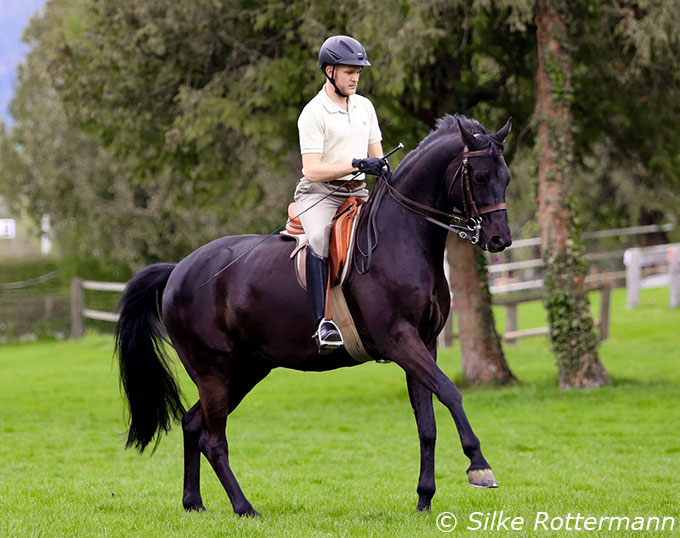
not waiting for his rider to initiate them
The difficulty I faced was not to initiate a change, but to prevent Fanti to do the next change on his own. He always wanted to anticipate the next change.
This is a difficulty in training which is absolutely not uncommon and when you look in classical equestrian literature it is described in many renowned manuals, from Wätjen to Seunig. The suggested methods to prevent a horse doing that differ though. The central question is: How can I prepare a horse to change leads without him anticipating the change? Of course by „easier“ series of only changing strides every 6th to 4th stride the rider could evade the problem by allowing the horse to canter on after an executed change to avoid the anticipation. But this is not a satisfying solution as the rider then lacks time to prepare the next change and it is absolutely impossible once you want to ride one or two times changes. For that reason the horse who anticipates has to get used to being prepared from the beginning of exercising changes in series of whatever frequency.
My grandfather Pierre-Eric Jaquerod with whom I train on a weekly basis and who is a wealth of knowledge and experience of well over 7 decades working with horses, advised me to prevent the anticipated changes by a half-pass-like shifting. This means I canter Fanti in a slight half-pass-position to prevent an anticipated change until I initiate the next change.For example if I change to the left lead and prepare the change to the right, I shift the horse with my right leg as if I want to go a tiny bit sideways to the left.
At the same time I change the horse’s position to the right and maintain this slight forwards-sidewards motion.
As long as a horse canters like this, he is simply unable change the lead on his own. With the (old / previous) outside leg which becomes the (new) inside leg I push the horse slightly sideways and as soon as the horse is ready, this leg slips to the girth and I prevent with the new outside leg that the horse continues cantering a a fraction sideways. The rider has to internalize this technique and the better this works, the more invisible the procedure becomes, until it is only a subtle feeling for me as a rider and no real sideways pushing anymore.
This whole procedure unsettles some horses a bit at the beginning, Fanti as well. They are eager to change the lead and get prevented by this technique which can annoy them. So this procedure is a delicate one. It is necessary for a horse like Fanti who anticipates, but it is also a careful feel around how far one can go without annoying the horse.
But if it is correctly applied and repeated often and regularly, the horses get used to and accept it. It was no different with Fanti. The rider just has to be vigilant not to really annoy the horse, do only few changes and soon ride something different again which the horse can do easily and which distracts him.
Much has been written and discussed about which rider’s leg initiates the flying change. Depending on the classical equestrian literature one reads or which trainer you ask, one might say the inside leg and others might claim it is the outside leg. I myself use the inside leg to initiate the change because with the outside leg there is the danger that the horse canters with a slight travers position which the onlooker perceives as a swaying during the changes.
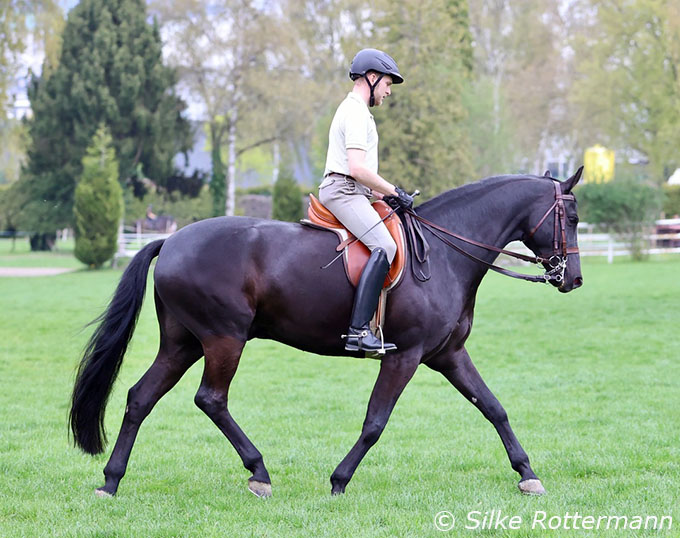
collection maintain the physical and mental relaxation.
This is an example for how helpful it is to focus not on training movements, but the entire horse. Because this change of position is something which we train for a long time in all a gaits while exercise different lateral movements. If the horse is trained to change position, bend and flexion, constantly by changing from one different lateral movement to another, the rider has effectively learnt to control the horse’s shoulder which is then so important if one wants to ride flying changes in series.
My grand-father’s most important influence, Swiss Olympic dressage medalist Gottfried Trachsel, once got to the point by saying „Who controls the shoulder, controls the horse.“
Flying changes are also a challenge for the rider because the horse needs to be adjusted very fast and in the changes from lead to lead almost instantly. So after thorough progressive training of the flying changes in series I should be able to initiate the changes only by moving the shoulders of my horse. This is a very „French approach“ which apparently has been established in the cavalry school in Berne.
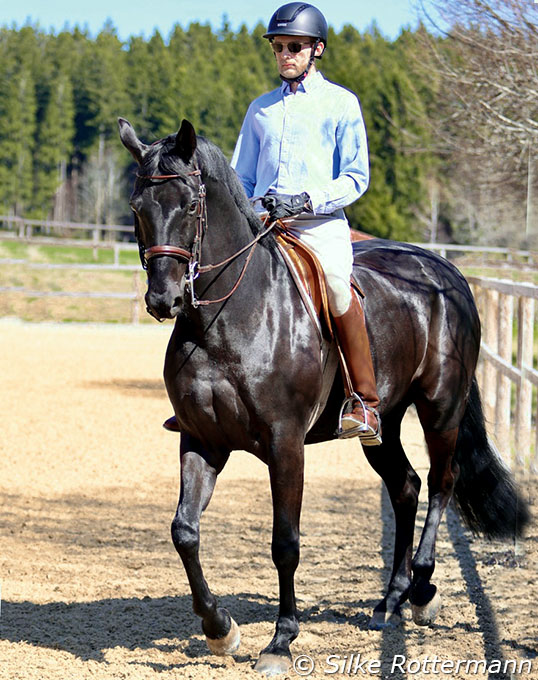
and flexion by switching from one different lateral
movement to another, the rider effectively
learns to control the horse’s shoulder
which is then so important if one wants
to ride flying changes in series.
The best example for somebody who used this technique to perfection was the Swiss Cavalry’s legendary Olympian Henri Chammartin. Even today, 60 years after his prime, he gets hugely admired on social media for his invisible aids and apparently motionless legs when he is seen in clips, riding endless one-time-changes on his double European champion Wolfdietrich. He also changed leads by moving the horse’s shoulders.
That Chammartin’s Olympic horses showed all the same seemingly effortless smooth changes with him initiating them almost invisibly was a result of their correct training over several years. My grandfather told me that Chammartin was never bothered that some of his horses struggled with the changes in series when they were younger. He did not force them , instead exercised them changing lead, bend and flexion constantly in all other movements where they are be required. One day his charges then also showed flying changes in series because of exactly these preparatory exercises which at first look had nothing to do with flying changes.
It shows that we cannot train one movement without others, we can only improve the horse’s flexibility and balance. Then we ripe the fruits in specific movements.
Jumping Through In The Canter Pirouettes
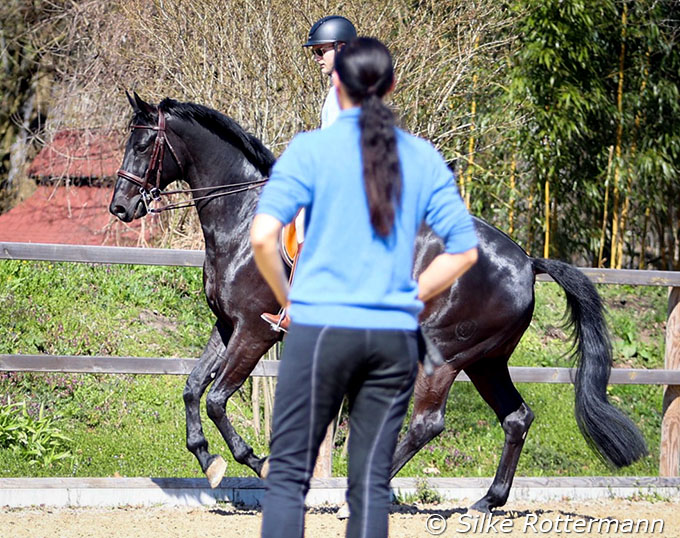
a decisive precondition for executing canter pirouettes.
I have already described the exercises we used in earlier stages of my horse’s training to get more collection in canter, such as small voltes, a few very collected canter strides in the shoulder-fore position or spiralling. When aiming for a higher degree of collection in canter it is paramount that pushing should not result in the horse becoming faster, because then we would be in need to „brake“ and this only leads to a heavy contact which we want to avoid at all costs. To ask the horse to go forward is meant in the sense of the French ‚impulsion‘ which means it should activate the hindquarters which then become more agile. Because the quicker the hind-legs react, the better the forward impulse gets maintained and the more they develop true impulsion. This results in an increase of lightness in the higher collection.
Once Fanti had achieved the necessary degree of collection in canter, I approached the first strides of a canter pirouette in several ways.
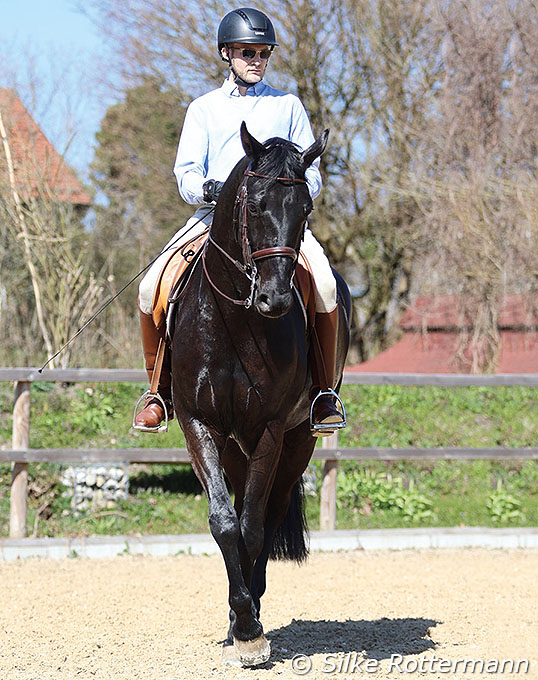
which reason the walk pirouette is the
ideal
preparation for the canter one.
An exercise which is not very well-known anymore, but which works really well is the transition from a walk into a canter pirouette. The horse already has the required flexion and bend and usually falls easily into the canter strides from that position. Sometimes this feels so easy, one is tempted to then ask too many strides which spoils the exercise. So two to three strides are the maximum I asked at the beginning, even if my horse felt so light and easy in them in this exercise.
In the competition classes the pirouette of course needs to be ridden on the centre line. Then it is paramount not to prepare the pirouette through a travers-like canter or even get into it in such a position. The horse is not straight like this. It results in the forehand having to go a significantly longer way than the hindquarters which influences the quality of the strides. Instead one can use the shoulder-in position to prepare the pirouettes on the centre-line.
The Essence of Collecting A Horse
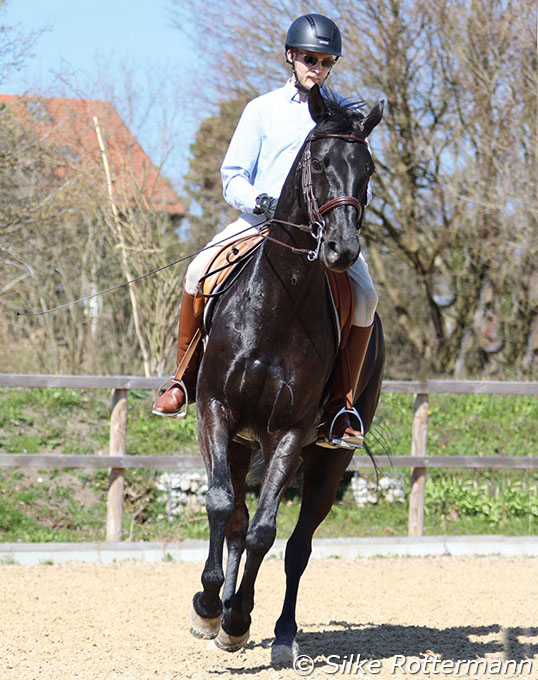
the canter pirouette
This self-carriage in particular shows in the contact which should become the lighter the more a horse is collected, until it completely disappears in the movements of the highest collection, such as the piaffe.
Here I speak of an end result which some horses might never achieve. Fanti is still on the way and if we achieve this end result, we never know until we are there. But as we have chosen the right route from the beginning and as I have very competent help, I am optimistic about the future.
In the next article I am going to report about Mantis training in the piaffe which we have started some time ago.
Related Links
Fanti's Progress - Part I: What Good Dressage Training Can Do to a Horse
Fanti's Progress - Part II: "The Rider Must Control Himself Before He Can Control His Horse"
Fanti's Progress - Part III: "Taking a Step Up While Refining the Basics"
Fanti's Progress - Part IV: A Three-Day Training Stint with Anja Beran
Fanti's Progress - Part V - Why Compete Today if You Want to Be a Classical Dressage Rider?
Fanti's Progress - Part VI: Rediscovering the Love for Dressage Through Fanti
Fanti's Progress - Part VII: On Firing the Engine by Training Outside the Dressage Arena
Fanti's Progress - Part VIII: On the Importance of "Losgelassenheit"