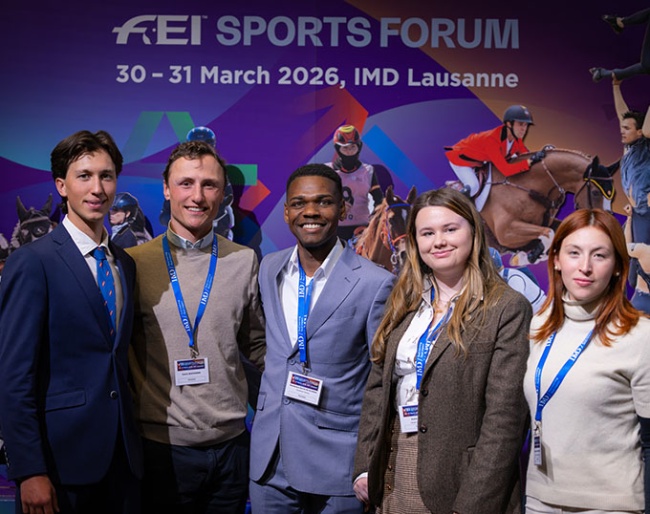
-- FEI press release - Photos © FEI/Germain Arias-Schreiber
FEI President Ingmar De Vos welcomed over 230 participants to the 15th FEI Sports Forum in Lausanne (SUI) on 30 March 2026 and introduced this year’s forward-looking programme, which combines discussions on the full rules revisions in Dressage, Para Dressage and Veterinary Regulations, with sessions on youth development, elite athlete pathways, innovation, and global engagement.
The President, who will finish his third and final term in December of this year, expressed particular enthusiasm for the first session, “From Pony to Podium: Our Youth, Our Future,” a priority highlighted throughout his 12-year mandate.
From Pony to Podium: Our Youth, Our Future
A wide range of topics was explored during the session, including the role of social media, the importance of coaches, trainers and the chefs d’équipe, youth rankings, access to horses and shows, the balance between theory and practice, regulatory frameworks, and the responsibilities of National Federations.
Youth as the Engine for Progress
The session was opened by Áine Power, Executive Director of Sport & Games, who highlighted the central role of youth within the FEI Strategy, where it is. part of the Growth pillar, “our engine for progress” that supports the FEI’s vision to “grow our sport globally with ethical equine and human participation at its centre.” One of the key objectives of this pillar is to involve youth regularly in the FEI Sports Forum, ensuring their voices contribute to the sport’s development.
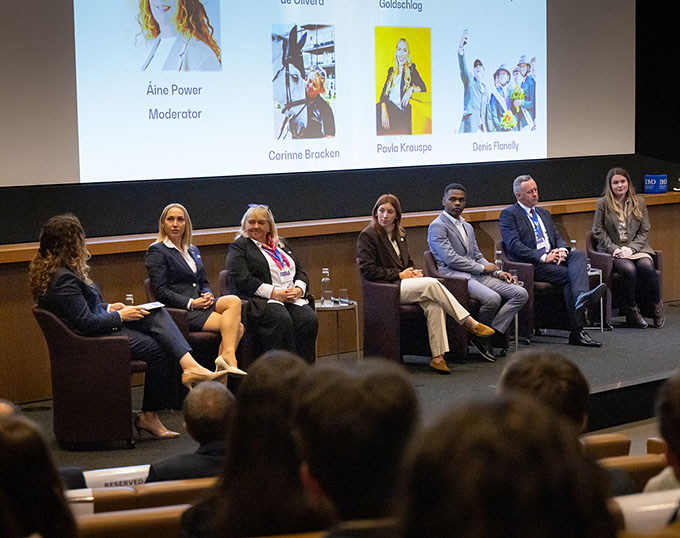
Goldschlag, Renderson Silva de Oliveira, Denis Flannelly,
Katie Reilly
The FEI Jumping Youth Education Programme was highlighted. This initiative, which was rolled out last year, equips young athletes with knowledge beyond competition, covering governance, horse welfare, rules and regulations, as well as social media and media training.
The Statistics
Victoria Rydborn, FEI Deputy Director, Technology Operations, took the floor and presented statistics on Youth athletes and events. Her presentation highlighted key trends in global youth participation in equestrian sport based on FEI data, a survey of National Federations (NFs) and former Youth champions. Youth athletes represent around half of all FEI registrations, rising slightly from 49.63% (20,390 athletes) in 2018 to 49.99% (21,375 athletes) in 2025. Female participation predominates and has increased from 72.52% to 74.10% over the same period.
Event activity has expanded, with a growth in FEI youth events across disciplines between 2023 and 2025, although regional and national disparities persist. On average, NFs organised 54 youth events in 2025, with four federations exceeding 250 events, while 17 held national competitions but no FEI events. Youth are typically categorised across four levels: Children, Junior, Young Riders and Under 25.
Youth participation remains strong at lower FEI levels (1* and 2*), supporting development pathways. However, retention remains a challenge: only 38% of former 2013 youth champions continue competing by 2025, with an average drop-out age of 22. Nevertheless, 75% express interest in returning, and 62% remain active in the equine industry, indicating sustained long-term engagement.
Panel 1 – Youth Development
Moderated by Áine Power, the Youth Development panel brought together athletes and coaches to discuss pathways, challenges and responsibilities in developing young equestrian talent.
Youth Athletes Renderson Silva de Oliveira (BRA), Dressage; Sarah Giulia Goldschlag (ITA), Eventing; and Katie Reilly (IRL), Para Dressage, shared their experiences transitioning to senior level. Katie Reilly described starting international competition as an “eye-opener”, requiring careful pacing, while Renderson Silva de Oliveira told his inspirational story of starting as a groom to competing internationally at Grand Prix level. Sarah Giulia Goldschlag emphasised long-term development and community learning, having grown up near the historic Eventing venue Pratoni del Vivaro, host of the 2022 FEI Eventing World Championship.
Coaches Denis Flannelly (IRL), Corinne Bracken (HKG) and Chair of the FEI Vaulting Committee Pavla Krauspe stressed that strong support systems are essential. Key coaching qualities include patience, empathy and education, while consistent professional guidance is vital for athlete performance, horse welfare and to ensure that horsemanship remains central to the development of young equestrian athletes.
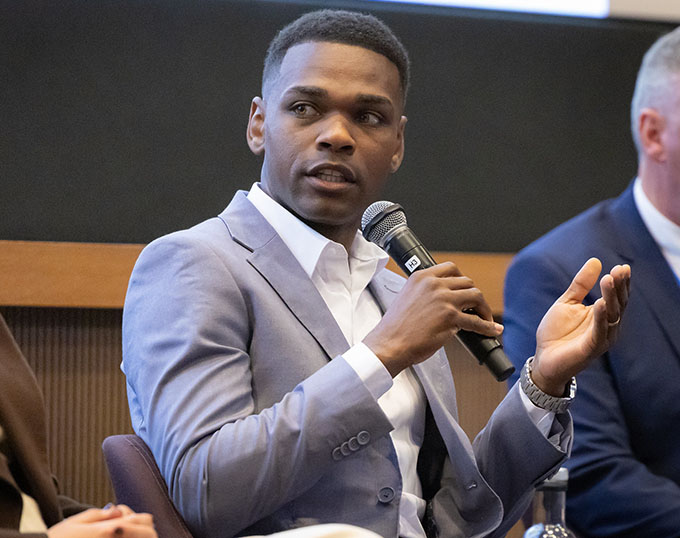
Communication and engagement were identified as critical, with platforms such as Instagram and WhatsApp helping reach younger audiences. Creating safe, supportive environments for communication, learning and dialogue remains key for all athletes.
The panel also addressed the public scrutiny of the sport. Sarah urged athletes to be mindful online and united in promoting horse welfare, while Renderson highlighted using social media positively to showcase good practice and inspiring young athletes and their families. “When I post on social media, the horse is more important than me. People believe in us. They dream with me," said Renderson.
Particular emphasis was placed on horse welfare. As Sarah Giulia Goldschlag, a young eventing rider from Italy, noted, “If you don’t love the horse, you cannot progress in this sport. Your horse must always be in the best possible condition. You owe respect to your horse, both as an athlete and as an animal.”
Concluding, the panel emphasised that effective youth development depends on balanced progression, strong support networks and an unshakeable commitment to the welfare of the horse.
Panel 2 – Elite Pathway
The Elite Pathway panel, moderated by Todd Hinde, Director, FEI Jumping, brought together athletes Maria Buchwald (DEN), Driving; Gerard Casas Maxenchs (ESP), Endurance; Joe Stockdale (GBR), Jumping; Calvin Böckmann (GER), Eventing; and US Equestrian’s Director of FEI Sport Hallye Griffin to discuss the transition from youth to elite sport.
The speakers highlighted the importance of strong foundations and support networks. Joe Stockdale spoke about choosing Jumping over cricket, noting that while the physical demands differ, mindset and work ethic are transferable. Gerard Casas Maxenchs and Maria Buchwald emphasised family and community support, while Calvin Böckmann underlined the value of consistent coaching, particularly from his mother, herself a former elite athlete.
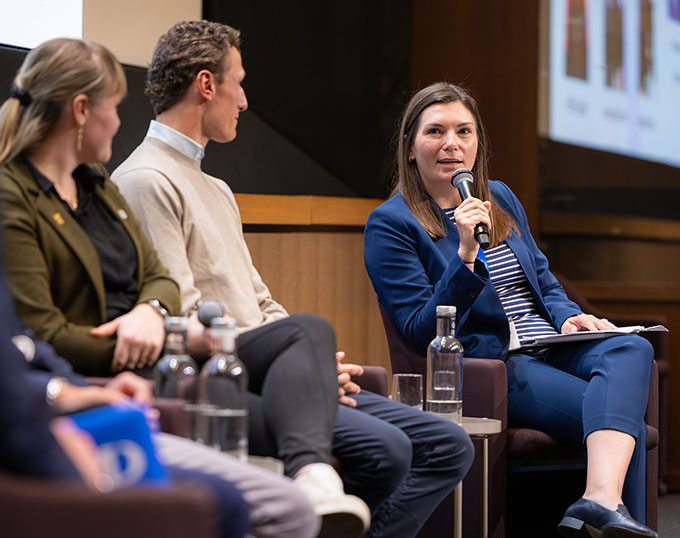
panel which discussed elite pathways for young athletes
Panellists acknowledged the challenges of progressing to the elite level, particularly financial barriers and limited opportunities to compete at the highest levels of the sport. Maria Buchwald shared how working as a groom created pathways for her development, while Hallye Griffin highlighted the importance of creating meaningful competitive opportunities, even at grassroots level.
Social media was recognised as both an opportunity and a risk. While it can attract sponsors and promote the sport, Joe Stockdale cautioned that misuse can damage reputations. National federations are increasingly providing guidance to help athletes use these platforms responsibly.
On major events, athletes stressed the need for constant readiness, even if they were onsite as a reserve, and maintaining a strong team mindset.
The discussion concluded with a call for greater accessibility, sustained support beyond youth categories and increased focus on athlete wellbeing, including mental health resources and safeguarding measures.
Olympic Regulations
The day continued with a session focused on the FEI Regulations for Equestrian Events at the Olympic and Paralympic Games Los Angeles 2028. Following the consultation period, the Regulations will be submitted for a vote at the FEI General Assembly on 5 December 2026.
Related Links
FEI Sports Forum 2024 opens in Lausanne with Horse Welfare at Forefront of Discussions
FEI Championships, Safeguarding and Gender Equality on Day Two of 2024 FEI Sports Forum
Recommendations for "A Good Life for Horses in Equestrian Sport," Topic of Discussion at 2023 FEI Sports Forum