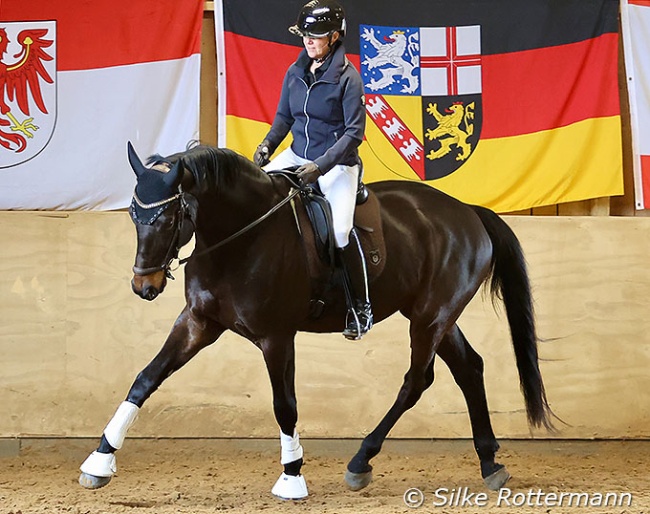
-- Text and Photos by Silke Rottermann for Eurodressage
This article is a continuation of: Burgtagung 2026: The Way is the Goal - Which One Leads to the Future of Competition Sport?
The fortress was calling once again and as usual many people followed this call to the "Burgtagung," a three-day educational equestrian seminar, in the small village of Altleiningen near Bad Dürkheim.
The driving force behind this pretty unique event, Brigitte Seidler and her team, once again managed to attract horse folk from far beyond the border of Rhineland-Palatinate and even Germany. The motto for this sixth edition, which took place in February 2026, was "The Way Is The Goal."
Meeting At The Fortress
Officially called the „Palatinate Training Conference“ and organized by the Horse Sport Association Palatinate, this three-day seminar is somewhat special in that it brings together a whole bunch of renowned riders, trainers, vets, therapists and judges who hold different workshops for the participants.
Originally created in 2015 by Brigitte Seidler, chair of the association, to offer the trainers of the 110-member clubs of the Horse Sport Association Palatinate a high class possibility to educate themselves on a variety of topics, the event now attracts participants far beyond the borders of the German state of Rhineland-Palatinate. In 2026 more than 160 people also came from Austria, Switzerland and Finland to take on the opportunity to meet like-minded people and learn from some of the best.
The Burgtagung takes place every second year at the Fortress of Altleiningen which is a Youth Hostel and located at the outskirts of the identically named village. The location enables the participants to sleep, eat and learn all in one place of which the historic charm certainly adds to the good atmosphere.
While the lectures are held in the seminar rooms of the Fortress, the practical parts take place in the nearby indoor arena of the Riding Club Leiningerland, a few walking minutes away from the Fortress.
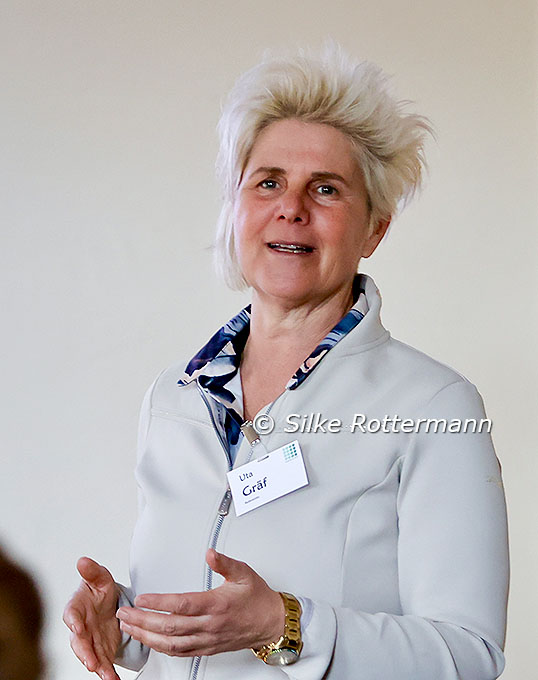
Uta Gräf on Riding Forward-Downward
Arriving in the lobby of the Fortress, I met up with a friend and we went early to the seminar room of the first afternoon-block as I was sure it would soon be bursting. The name of the lecturer? Uta Gräf.
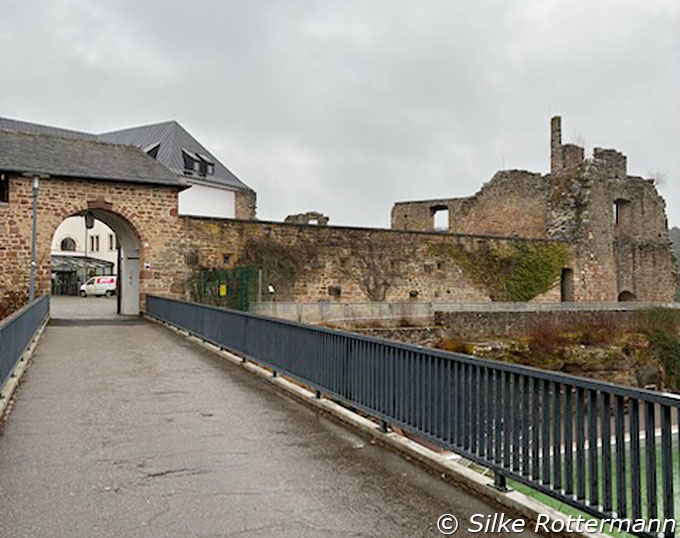
place to meet and learn from renowned equestrian
experts
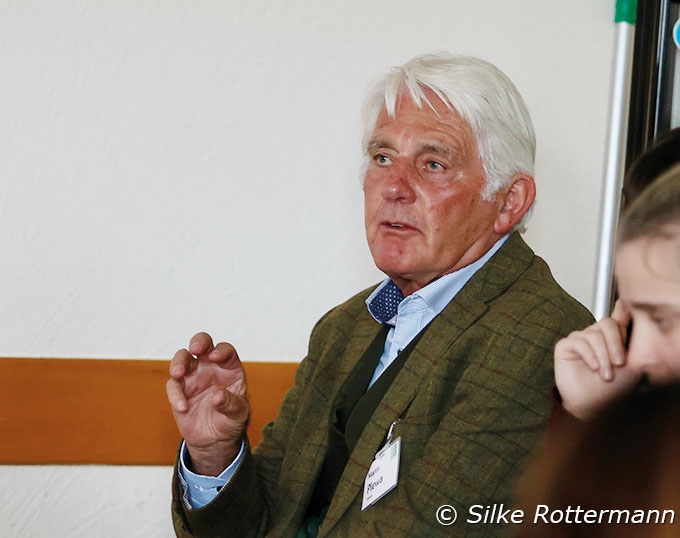
When Uta entered the room with her signature broad smile, some people were already sitting at and on the tables at the side of the room. Among them German riding master and former international eventing rider and „Olympic gold coach“ of the German eventing team, Martin Plewa.
Uta is a person who usually doesn’t beat around the bush but at the same time is exceptionally open minded. She opened her lecture referring to the old discussion about riding forward-downward: "I agree with the critics insofar as that bad forward-downward riding is useless."
It's All About Balance
In the following over 60 minutes the 54-year-old not only showed what a good forward-downward position looks like, but also gave valuable advice.
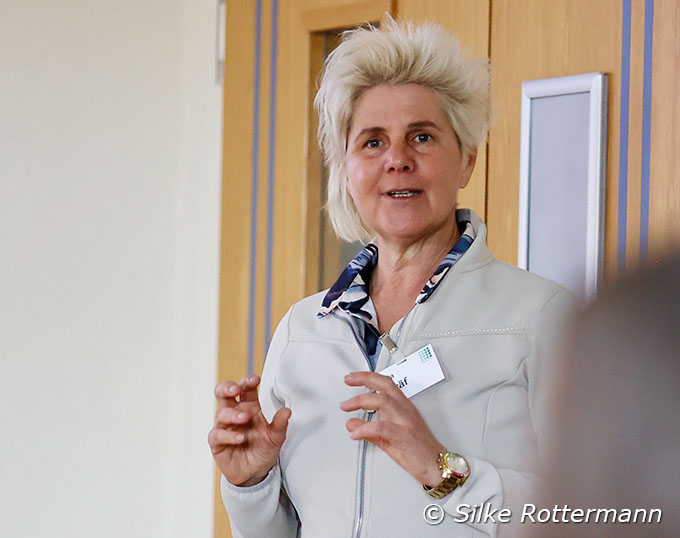
"It is important to be aware that a good and effective forward-downward position can only be achieved and sensed as comfortable for the horse when he is in balance. If a horse still struggles with his degree of balance in the warm-up phase, there is no need to continue trying to achieve the forward-downward position. One can warm-up a horse many different ways and no foot is broken if the forward-downward position is not part of it yet. If the horse is more balanced in the working-phase one can try again and often it then works out much better."
After Uta clarified that balance is the key to a good forward-downward, she started a short film sequence showing her with her legendary recently deceased Holsteiner stallion Le Noir. "Every lecture has to start with Le Noir," Uta beamed, explaining that her former Grand Prix horse moves in balance, is closed behind and works very diligently.
Who assumed that forward-downward is the horse "eating sand" - to say it in the words of a famous deceased riding master - was proved wrong. "It totally depends on the horse in which degree of elevation a horse needs to be stretched," Gräf stressed. "Important is that the neck comes down from the withers and not a high neck with the head down."
Forward-Downwards in Walk
the horse behind the vertical'
"The horse needs to find his walk and the rider has to allow it. This means the task of the rider is not to bother the horse and just be carried away. If the rider can relax, the horse has the right tempo," Uta explained, while Martin Plewa added from the sideline that "the rider has to sense a diligent walk. A diligent walk gets maintained even if the reins get shortened again."
Uta confirmed from her rich experience as a highly sought-after clinician that many riders are tempted to squeeze their legs in order to animate the horse walking with more diligence, but that this can destroy the walk.
It Does Not Purely Relate to the Neck
Following the discussion in certain riding circles about detrimental effects of forward-downward for years now, it has become very obvious to me personally that those people reduce the horse to the head-neck-position, so it was of paramount importance when Uta raised the proverbial forefinger by saying that forward-downward does not only relate to the neck.
Gräf asked the audience to look at the whole of the horse and focused their eyes on the neck muscles which wobble a bit when the horse is executing a relaxed and correct forward-downward.
While the video sequence of Sisco de Luxe showed a horse with a comparatively long and deep neck, the next sequence proved that each horse needs his individual position. The mare Hermine did not stretch in the same way, staying a bit shorter in the neck, but still showed all ingredients of a good and correct forward-downward position.
Uta reminded us that no head-neck-position should be maintained for a prolonged time. "We do need to take each individual horse into account. If it is well done, do not do 100 rounds of it. The horse needs to feel comfortable in that position, so we should not overdo it. It can easily be included between riding single movements to prevent tiring and, therefore, tense muscles and to praise the horse and then elevate him a bit more again."
An Artform
To ride forward-downward positions like Uta Gräf is certainly an art, but it is no witch work. Uta encouraged the audience to be patient and not to expect too much too soon. "If a horse takes months with small steps and in the end shows the position well, it is totally okay," she stated.
Still Uta admitted that "mistakes of the rider immediately take an effect on the quality of the forward-downward position. If a horse comes too deep for his individual balance it promptly affects the balance or his tempo, he drops on the forehand and looses impulsion."
Uta demonstrated this typical mistake with another video in which it became strikingly clear that the horse, being too deep and running on the forehand, began to swing again in trot when he was elevated a little bit more. "When the rhythm is good in the forward-downward position, you are on the good way."
Related Link
Burgtagung 2026: The Way is the Goal - Which One Leads to the Future of Competition Sport?