-- - Text © Eurodressage (this article expresses Eurodressage's' eye-witness account and opinion about the competition)
-- Photos © Astrid Appels/Eurodressage - No reproduction allowed - NO SCREENSHOTS FOR SOCIAL MEDIA
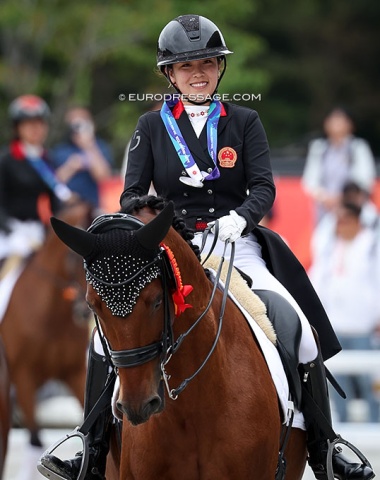
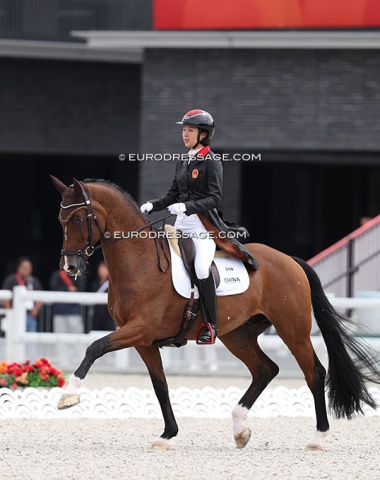
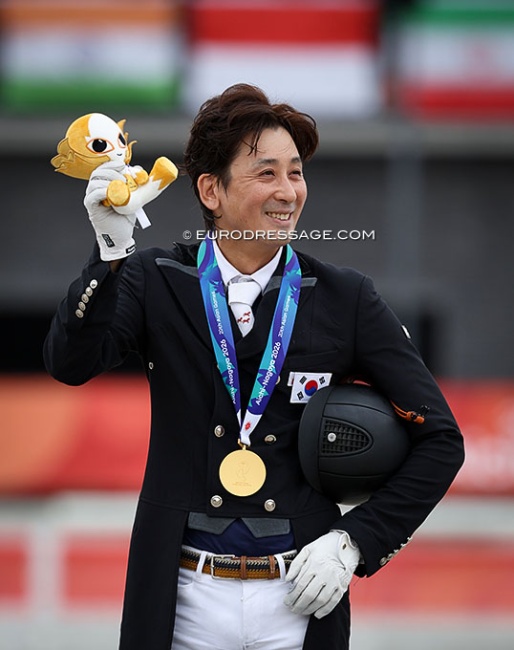
Korean Dongheon Nam won the individual gold medal -- to his own surprise and those of the spectators -- as the dressage competition at the 2026 Asian Games came to a conclusion at the JRA Equestria Park in Tokyo on Sunday noon 27 September 2026. The Korean was joined on the podium by the two European trained Chinese riders, both named Jiayi. Ju won silver and Rao bronze.
Dressage Sport at Baji Koen
The Baji Koen equestrian center, best known for hosting the 2021 Tokyo Olympics, once again welcomed 45 international dressage riders for the 2026 Asian Games. The Asiad are held every four years and are the largest sporting event world-wide with 12,000 athletes competing ( the Olympic Games has 10,000 athletes). Equestrian sports first made an appearance at the 9th Asian Games in 1982 held in New Delhi (IND) following by Seoul, South Korea in 1986, where dressage was introduced. Equestrian sport did not take part of 11th edition in Beijing, but was reintroduced in 1994 and has since been part of the Asian Games program.
The 2026 Asian Games are taking place in Aichi-Nagoya, Japan, but equestrian sport (eventing, dressage and show jumping) moved to Tokyo as the existing facility there could not be topped by any other venue in the country. The staff and volunteers went above and beyond to create an unforgettable competition and experience. The Japanese hospitality and their friendliness -- even though rules were strictly applied and not always logical -- were a breath of fresh air after having to deal with German grumpiness and rudeness at the World Championships in Aachen a month ago.
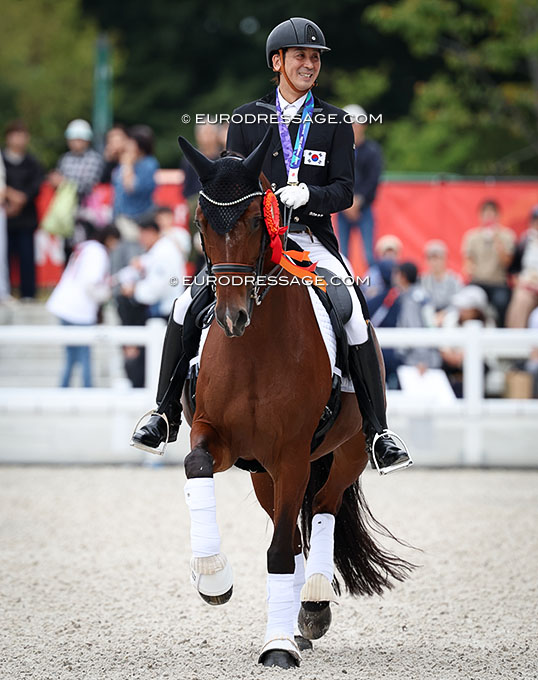
For many horses - the majority based in Europe - the Asian Games are a big ask with 10 days pre-quarantine in Aachen, a flight to Japan, a week of acclimatisation in Japan before three, consecutive days of competitions. Some horses looked a bit drained on Sunday, but most coped very well with the big ask. Fifteen combinations rode the individual final and had earned their starting place in the Kur through two qualifying rounds. A maximum of two combinations per nation allowed to qualify to create a bigger diversity of flags for another medal opportunity.
This year’s Asian Games introduced a mixed-tour format for the first time, allowing athletes to follow either the Small Tour or Big Tour route, but only one pair opted to do so and the final was fully ridden at Intermediate I level.
Plain Rice
2026 Asian Games
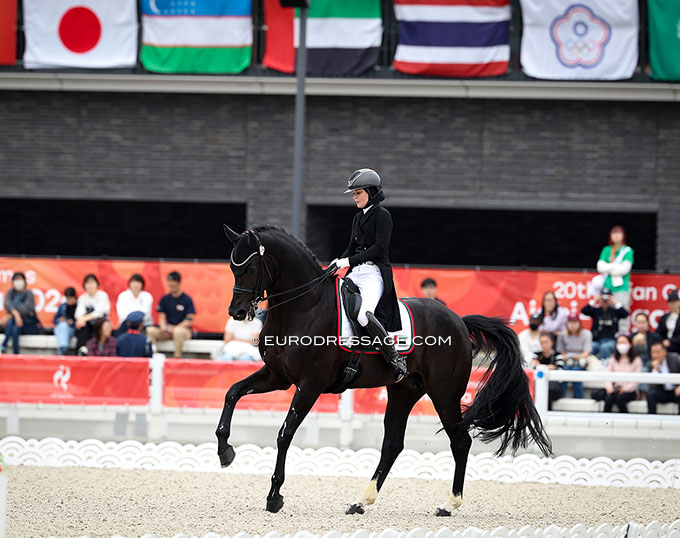
As the class finished this reporter found it hard to decide who deserved to be the winner, or even figure out how the ground jury determined it. What dominated in their verdict? The ground quality of the horse, the presentation and harmony in the riding? Technical errors made or not? Of course, in principle, all three components are put in the scale, but I wasn't sure what truly made the difference in the end.
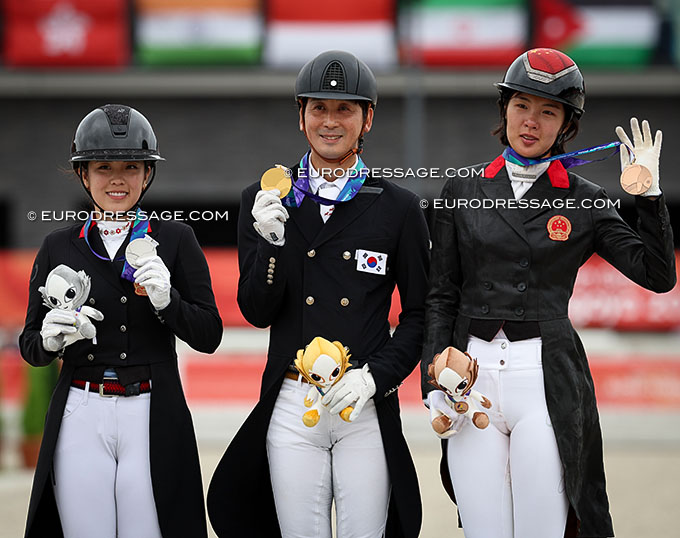
The panel of judges, consisting of Sunil Shivdas (IND), Dr. Ricky MacMillan (AUS), Dr. Hans-Christian Matthiesen (DEN), Vittorio Barba (PHI), and Helen Hughes-Keen (NZL), had a difficult task to do the sorting. It's hard to analyse the results as no break down between the technical and artistic marks are publicly provided; only average scores of the individual judges. While their scores for the top ranked riders were not that ridiculously far apart, some of their placings were. However, that also proves how tight the competition was. Four judges saw a different winner: Judge at C Matthiesen had Maksakova first, Shivdas and MacMillan preferred Rao, Barba liked Nam the most and Hughes-Keen preferred Yu.
Surprising Gold
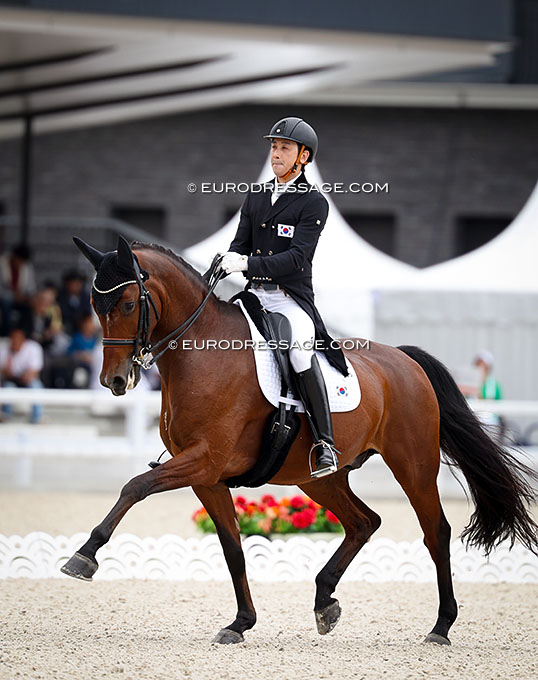
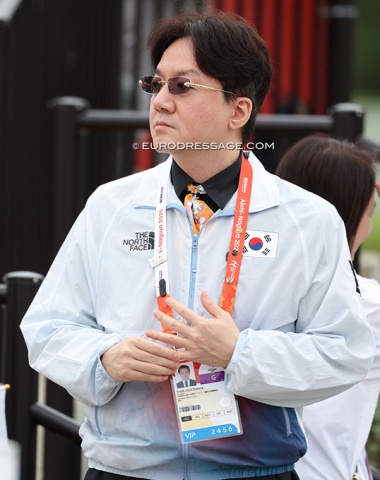
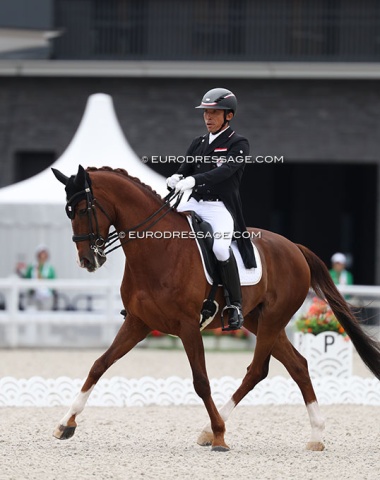
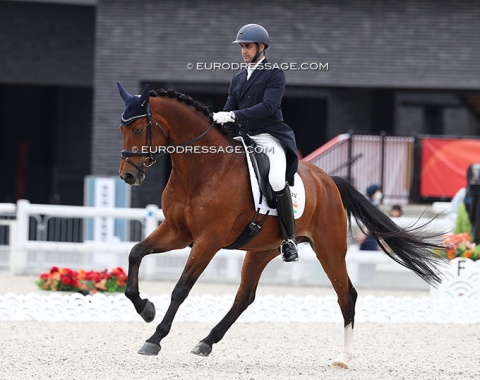
The Korean had the lucky draw of the best starting spot: the last rider to go in the freestyle. He cleverly rode to world renowned Pop Demon Hunters and Coldplay music, which sounded familiar and struck a chord with many. The catchy, high energy tunes fitted the bay gelding well, who was very willing to work, but required his rider to keep his cool and not make mistakes. The compact built gelding has three good basic gaits with a fabulous, uphill canter. They started with good trot extensions and ground covering half passes, always keeping the poll as highest point, even though the contact could have been lighter. There was a bit loss of clarity in the collected walk, but the extended had plenty of overstep and good relaxation, but the horse needed to march more actively. In canter the two tempi changes were straight, but some issues crept into the test: there was a loss of stride before the left pirouette and a mistake in the three tempi changes which brought the pair behind the music. In the final halt the horse stood still and the rider leant forward to check the mouth, not really a smart thing to do exposing one's own doubt in the bridle contact.
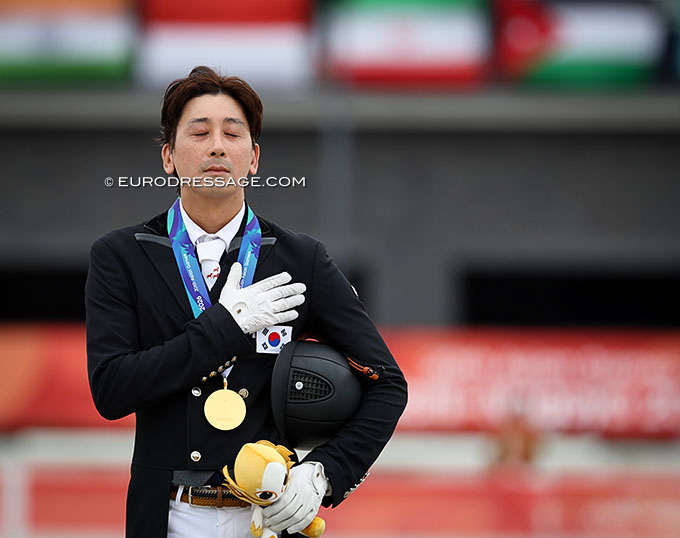
At the prize giving ceremony, Nam looked deeply happy and moved with this important career win for his own career and his country Korea. It had been seven years when the Korean based rider last mounted the podium for gold in the inaugural (and much smaller and less important) FEI Asian Championships in Pattaya, Thailand, in 2019. Nation Korea had to wait 12 years for another individual gold medal in dressage. In 2014 Young Shik Hwang won gold at the Asian Games in Incheon.
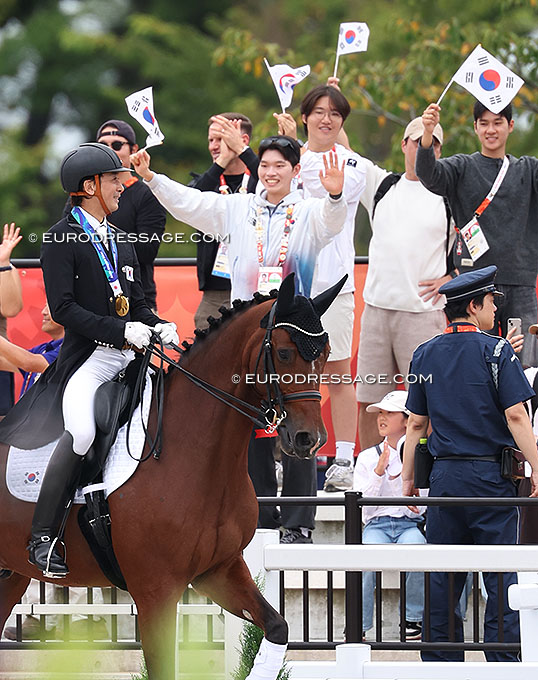
Nam has now ended Korea's medal drought. He partnered with the bay gelding Leonidas in 2023 and the pair has only shown in 2 CDI's so far (CDI Aarhus in December 2025 and CDI Lier in February 2026) before heading to Tokyo.
“Together with my horse, I tried very hard today to do everything. We gave it all. I’m very grateful for Leonidas, he did very well," said the rider at the press conference. Nam has trained with the late Jung Kyun Suh and German Yvonne Fiestelmann.
Dufour's Silver Streak Rubs Off on Yu
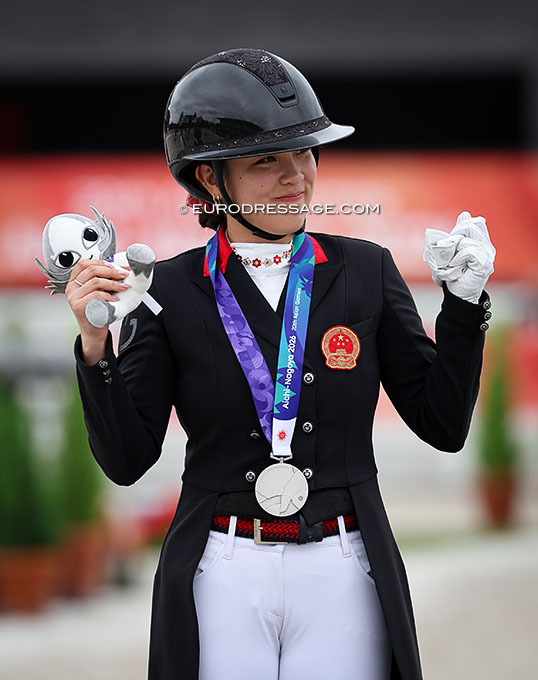
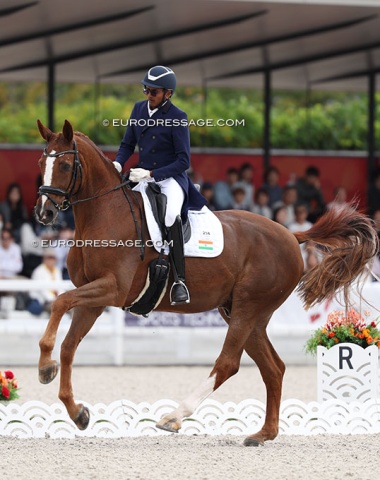
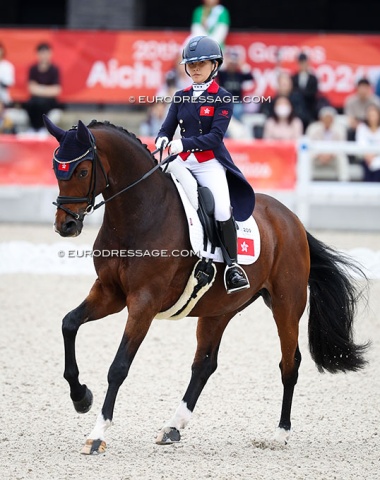
Aboard her 14-year old Danish warmblood gelding Jackpoint (by Johnson x Welt Hit II), Yu rode to Chinese themed piano. The pair's strong point is their presentation: soft in the contact, nice and long in the frame, and the horse working pleasantly for his rider, steady in the poll. The chestnut's weaker points are the not so rhythmical walk and the lack of lateral bending and elasticity in the body. There simply is not enough crossing in the trot half passes. Jackpoint is impressive on straight lines: super trot extensions, super expressive and straight tempi changes. The half pass right was not entirely crisp regular. One change in the two tempi's was not entirely through behind, but the line of three tempi changes was fabulous. The relaxation and overtrack in the extended walk were good, but the horse was almost entirely on a loose rein and there was not enough V-moment for the high scores. Yu and Jackpoint stood out with their pleasant and soft silhouette.
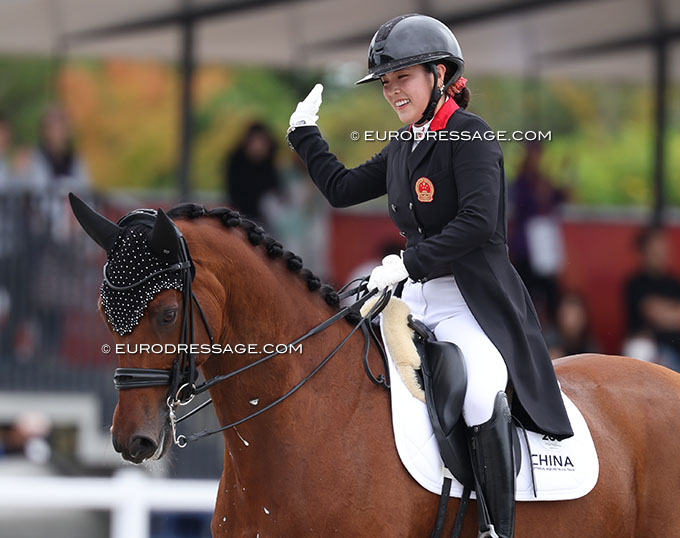
"I was extremely focused. I wasn’t aware of anything else, just the music, how my horse was feeling and where I needed to make small adjustments," Yu commented. "The only shortcoming today was that I got too far ahead of the music.”
Tears for Bronze
China's team gold medal winner and 2025 FEI Asian Championships individual gold medal winner Jiayi Rao could not hide her emotions when she stepped onto the podium crying sad tears for getting bronze.
The happy-go-lucky Jiayi "Sarah" Rao, who trains in Great Britain with Sarah Higgins, has been a bubble of joy at the horse show, connecting with a big fan club present in Tokyo, high-fiving random spectators in the team championship lap of honour and arriving in Tokyo with high-set goals and expectations of also clinching individual gold after gold in Pattaya a year ago. Rao and her 15-year old KWPN gelding Geniaal (by Vivaldi x Biotep) were never far from the lead. They were fourth in the Prix St Georges, second in the Intermediaire I and hoped for more in the freestyle.
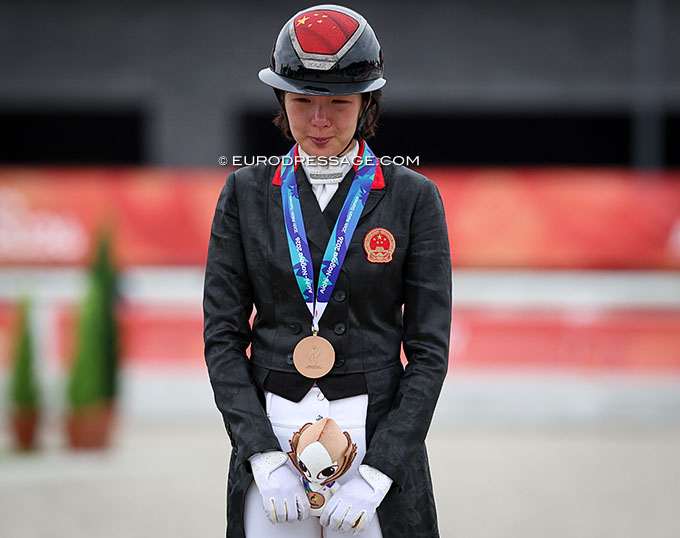
Rao posted 74,935% and landed third place. The judges were fairly consistent in their marks with 73,475% as low score and 76,100% as high score.
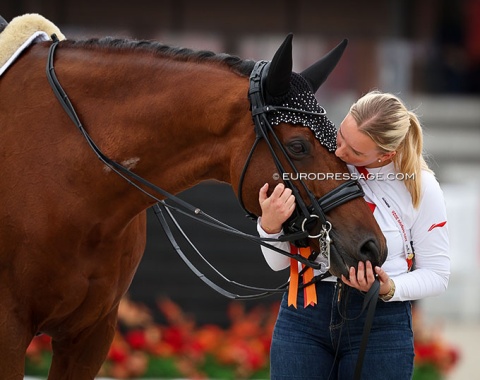
After the medal ceremony, Rao's spirits were lifted again and she was very appreciative of her horse. "I feel like Geniaal has been such an amazing horse here, and I was so pleased with him. We did all the elements very well.”
So Secret, So Close
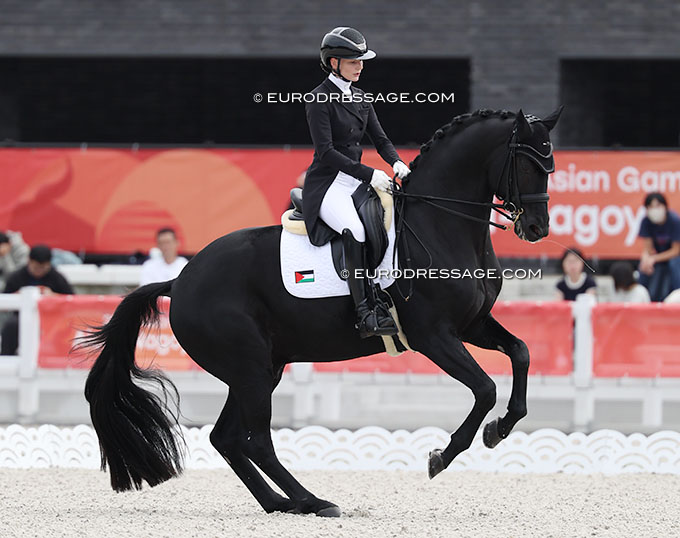
The Russian born Olympian, who rode in Tokyo 2021 on Bojengles, saddled her 8-year old Hanoverian So Secret (by Secret x Desperados) and performed to filmic, instrumental music with a lot of piano in it. No clue what it was and I didn't have time to check with Shazam. Her ride was probably the best one of the day as her horse has three very high quality basic gaits and was very consistent in the presentation, but the frozen mouth of the horse is not really the bridle contact one hopes to see. Maksakova, however, rode very nicely with a very steady frame, quiet hand and executed the lateral movements with a horse moving very soft-footed. They showed some of the best walk: clear collection, super extension. The horse can truly take the weight behind in the pirouettes, but the exits were rather big and the tempi changes don't always look as solid. One change was late to the aid, there was tension in the tempi's on the curved line. The final trot extension was a bit conservative but the end halt very secure.
Top Result for Taiwan
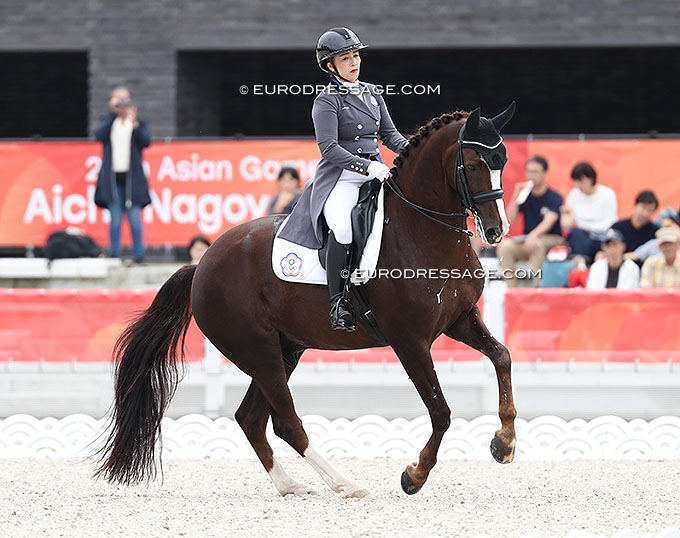
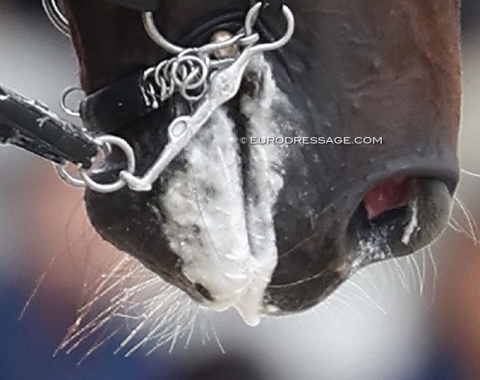
Trained by Janneke van Riet in The Netherlands, Yeh and the 10-year old KWPN gelding Lorava (by Giovanni x Westpoint) rode to music with a lot of violins. They showed really balanced trot work and a horse in a very steady frame with the poll as highest point. The extremely sugar coated mouth grabbed the attention though and highlights even more when the horse opened its mouth. In the extended walk the gelding did not stretch the neck at all, but the groundcover was good. The rhythm in the collected walk was rather dodgy. The uphill tempi changes were a highlight but there was a loss of impulsion in a left pirouette. She scored a personal best of 73,600%.
For Yeh these were her fifth (!!) Asian Games. She was part of the Taiwanese dressage team that won bronze at the 2014 Asian Games, which was the second time for Taiwan to win a medal in dressage during the Games. She rode Urband Legend at the time and finished sixth back then in the individual finals.
What About Nynn and Shingo?
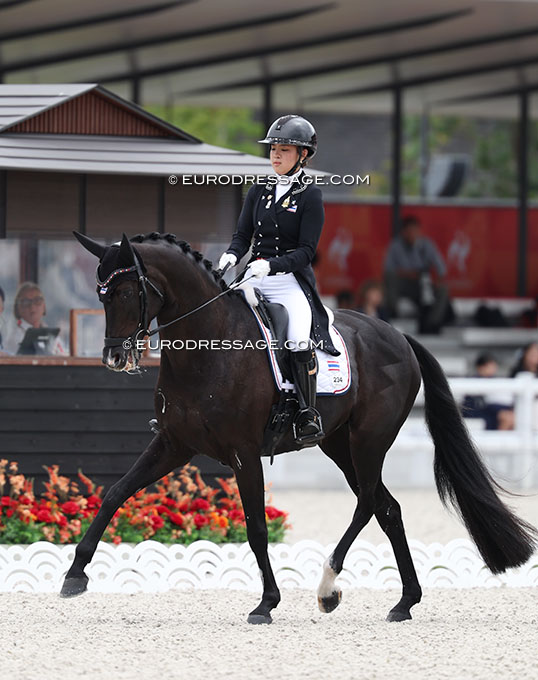
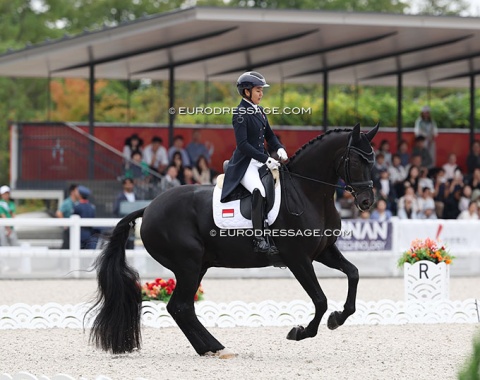
Puttisombat and the 13-year old Oldenburg bred Rock That Tango (by Rockefeller x Tango) could easily have been on the podium too, or even won, depending on what weighed through. A student of British Sara Gallop, Nynn certainly produced one of the most pleasant, soft, effortless rides of the day. Her filmic sounding (background) music did not leave an impression, but her kind presentation did. The very refined Rock That Tango has such a light-footed trot and was always consistent in the frame and soft in the contact. The extended trot on the short diagonals was better than the one on the centerline. The extended walk had sufficient overtrack and good relaxation and the flying changes were so lovely. There was a double beat in a right pirouette and one change in the twos did not look entirely through, but there was one fabulous line of three tempi changes. The judges were unanimous and had her betwen 72,600 and 74,375%.
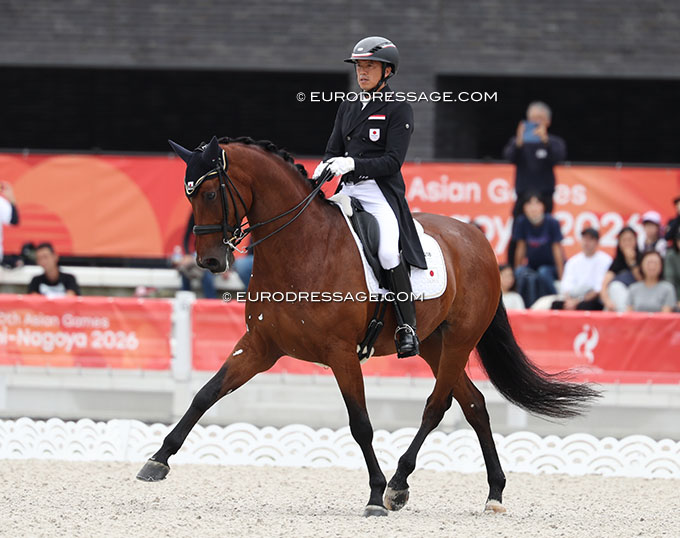
The 2026 Asian Games delivered an interesting competition in a mixed level format. For 2030 Asian riders will have to step up their game as they will be held exclusively at Grand Prix level in Doha, Qatar.
-- Photos © Astrid Appels/Eurodressage - No reproduction allowed - NO SCREENSHOTS FOR SOCIAL MEDIA
Related Links
Eurodressage Coverage of the 2026 Asian Games
Scores: 2026 Asian Games