-- Article by Silke Rottermann (with the help of Ivana Volken) - Photos by Silke Rotterman
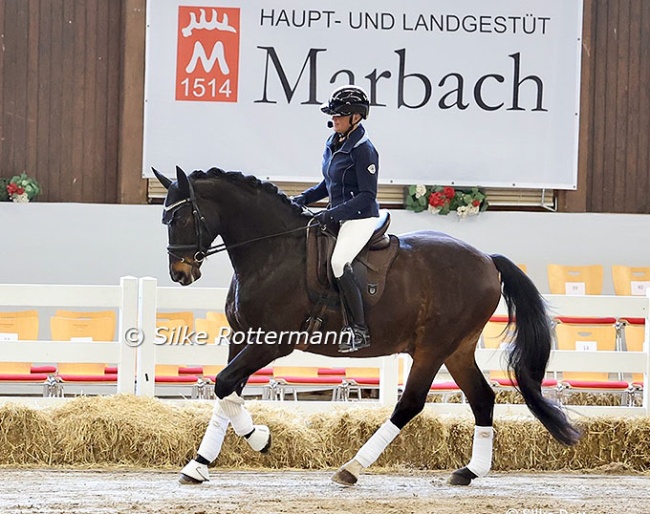
It was an early spring day as if painted: While the trees still looked naked and the fields more grey than green, the sun had already developed an amazing strength, even at the heights of the Swabian Alb, when I drove to Marbach State Stud on Sunday morning, 8th March 2026.
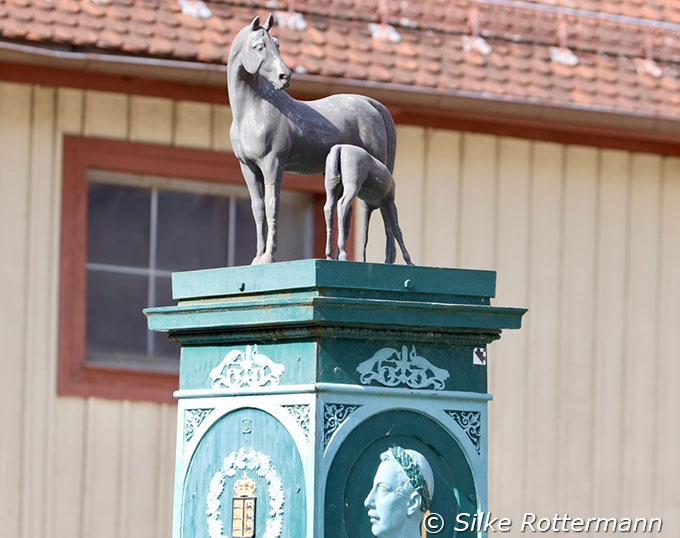
Walking into the historic courtyard with its famous mare fountain, I faced a stream of people with only one destination: The entrance of the big indoor arena of the stud where events, stallion shows and auctions are held annually. While some might shake their heads in disbelief that someone voluntarily spends such a nice spring afternoon in an indoor arena instead of enjoying nature around the stud, those who were there know why, myself included.
The Xenophon e.V. Association in Germany celebrated its 20th anniversary in Marbach with a jubilee seminar which reflected all reasons why Classical German Equitation had been inscribed as UNESCO intangible cultural heritage three years ago. The anniversary demonstrated all Xenophon stands up for: Beautiful riding following classical principles which puts the respect for the individual horse in first place.
German Grand Prix rider Uta Gräf, her husband Stefan Schneider and former German eventing national coach and "riding master" Martin Plewa offered a seminar titled "Train and 'gymnastizise' horses with lightness“ which surpassed all expectations.
Who didn’t go home inspired will never be.
The Moderator: Martin Plewa
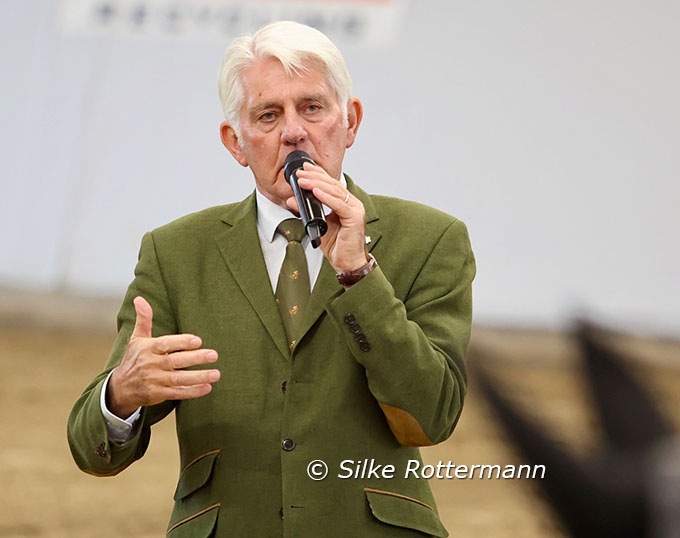
When everybody had taken their seats, Martin Plewa took to the microphone and welcomed the audience alongside Marbach’s director Dr. Astrid von Velsen-Zerweck. He did not miss to briefly introduce the Xenophon Association which was founded in 2006 with the goal to preserve equestrian art and as a reaction to the rollkur trend in its prime during this time.
Plewa, a board member of the association and well-sought after clinician, is firmly rooted in three-day-eventing. In the 1970s he competed internationally with the legendary Trakehner stallion Habicht (by Dr. Klimke’s first eventer Burnus AA) and the tiny Hanoverian mare Virgina (by Velten xx). He was Germany’s national coach of the 1988 Olympic gold medal team and also been an international judge (alongside his brother Dietrich Plewa).
The quality and success of a seminar is not only dependent on the horse-rider-combinations, but also on how complementary they are with the moderator: In this case Gräf, Schneider and Plewa complemented each other very well, which added to the success of the event.
Good Training Makes A Horse Successful
Gleaming sunshine penetrated the indoor arena when the huge door opened and Uta Gräf entered the stage with the first of her two horses. She had trailered them to Marbach on a four-hour journey in the morning from her home base about 250 km north of Marbach.
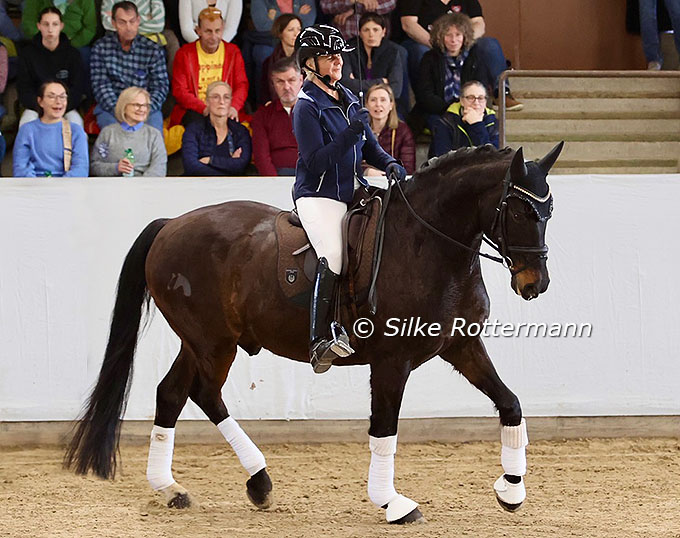
Uta disclosed that SD was originally intended to stay with her a limited period of time, but then his outstanding character and work ethic soon transpired and he steadily climbed the ladder of dressage levels in the time to come—a proof that comparatively average horses can become winner in series when good training allows them to blossom.
Uta started in walk with long reins, brushing off any stiffness which SD might have developed during the journey on the trailer
In the following 30 minutes she demonstrated what characterizes her approach: Easiness as the red line. The ingredients: Let the horse find his stride and contact, ride with impulse-like aids and praise by giving regular little breaks in between the more challenging and effort-making exercises to maintain the horse’s motivation.
Easy Warm-up - Too Many Aids Kill the Aid
At the beginning Gräf wanted to see how the horse felt and allowed San Diamond to choose the head-neck-position he preferred, riding on a very light sensing rein. She rode a few transitions from trot to canter and used what Plewa called "subsiding half halts," so that the horse went smoothly from one gait to the other like on a soft string. The result was that the horse began to work more diligently from behind, over the back, and started looking for the contact, finally resulting in an amazingly soft movement which flowed. Plewa remarked that this kind of warming up is exemplary and that these „subsiding aids formerly had been written down in the German guidelines. They should be applied with young or not completely warmed up horses.“
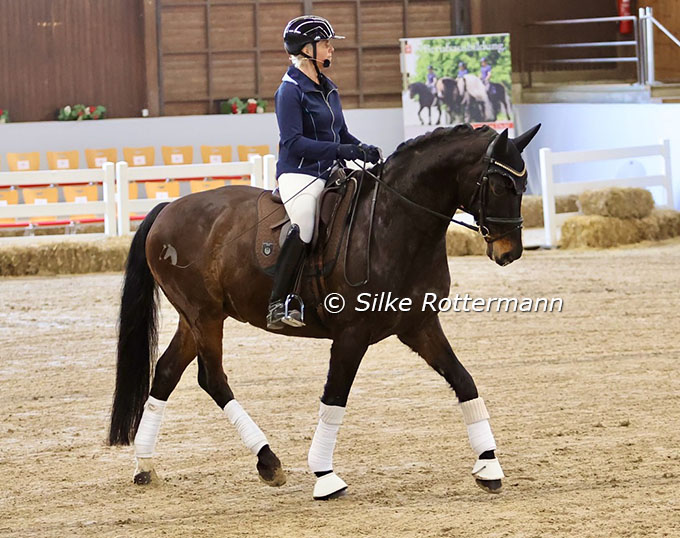
It was obvious that Gräf applied a minimum of aids. According to the motto "too many aids kill the aid" she stressed that she only ever gives impulses and stops as soon as the horse reacts. "To apply pressure permanently is unpleasant for the horse and it will get tense stomach muscles which result in a tense back." Martin Plewa was totally in unison with it and reminded the audience that as a rider one always has to pay attention to the way a horse learns which is equivalent to operant conditioning. From this it follows that permanent pressure from hand, seat or legs makes no sense for a horse. Gräf never sat against the movements of her horse and it looked so easy like she was just carried away by his soft natural movements.
"Nowadays we often see riders who sit violently backwards and put a lot of strain on the horse’s back," Plewa mentioned. "A half halt begins with increased driving aids. It is nowhere in the guidelines that riders should act backwards with their hands. The tongue of the horse has so many nerves which makes it very very sensitive," he added.
Minimum Aids, Maximum Variety
Gräf rode with a minimum of aids and a maximum of variety, securing her horse’s attention and motivation at any time.
No matter if flying changes in series, canter pirouettes or half passes: San Diamond neither lost rhythm nor his admirable relaxation, demonstrating his high degree of balance and self-carriage which became particularly evident when Gräf took the reins in one hand and nothing changed: The horse continued like with both hands at the reins.
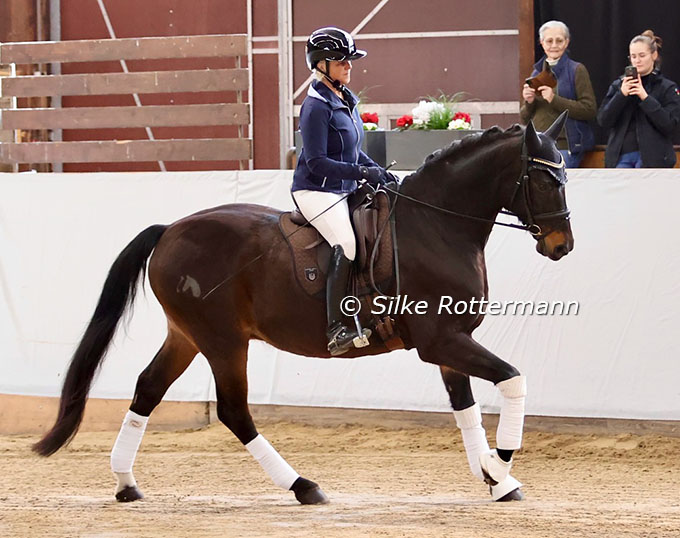
Gräf’s words made aware why a horse like San Diamond is able to be so successful against horses with bigger movements: Because he isn’t overasked, he shows a great naturalness and extraordinary correctness in the movements. He expresses a willing cooperation based on the fact that what he does seems easy for him.
Martin Plewa not only mentioned that SD is a horse one likes to look into his (relaxed and content) face, but also commented on the horse’s very correctly developed trot extension with correct lengthening of the strides as well as the frame. "Today we often see spectacular trot extensions, but the hindquarters do not follow. The result is the gaining of space of a working trot in a novice dressage and does not fulfil the criteria of an extension," he stated.
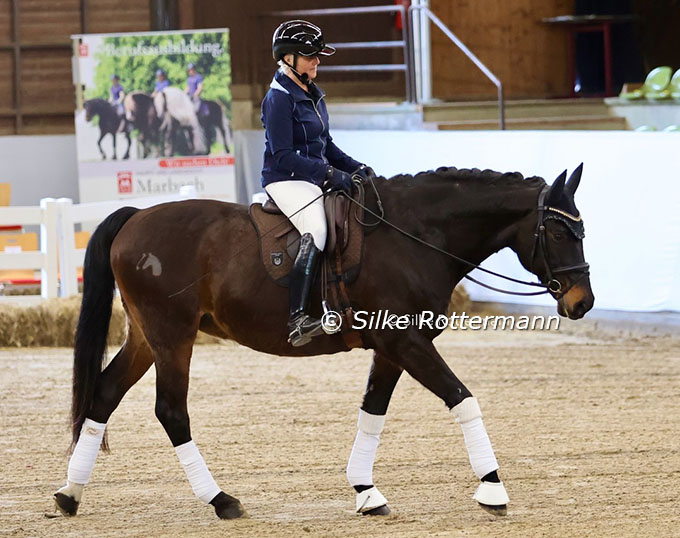
San Diamond always immediately switched off and marched
in chill mode
At the end of the presentation of Gräf’s first horse, who had conveyed so much relaxation and lightness, Plewa took a firm stand by saying one should prioritize the horse’s well-being more. The focus should be on how one recognizes that a horse feels well. This should also be the focus in training. "The goal is that rider and horse form a team. Is that the case it should be mentioned in the protocol, a comment like ‚secure, content, super team’ and then a good mark should be obligatory."
On A Silk Thread
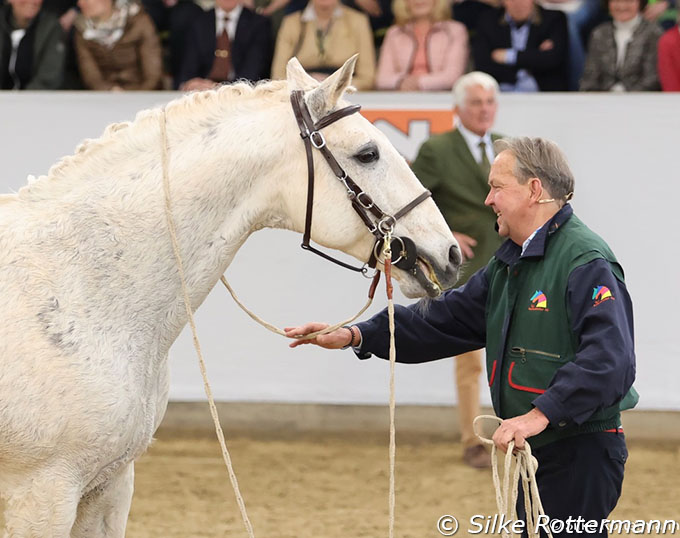
Now there was a different horse in front of Schneider, who can be described as an all-around horseman in the truest sense. He runs a vet practice at their yard near Kirchheimbolanden in the south of Germany, trains the young horses, and competes in Working Equitation at Masterclass.
The horse’s vibrations were almost palpable for the onlookers. XL Do Pinheiro - a Ferrari on four hooves, extremely sensitive and kind of electric, but not in a negative sense. The well muscled and light footed grey (by Ortega x Galan) completely denied his 23 years of age (which Schneider withheld) and went like on a silk thread. Only in canter his exuberant joie de vivre took the upper hand for a moment by shaking his head and giving a little buck, only to be back with Schneider within a second.
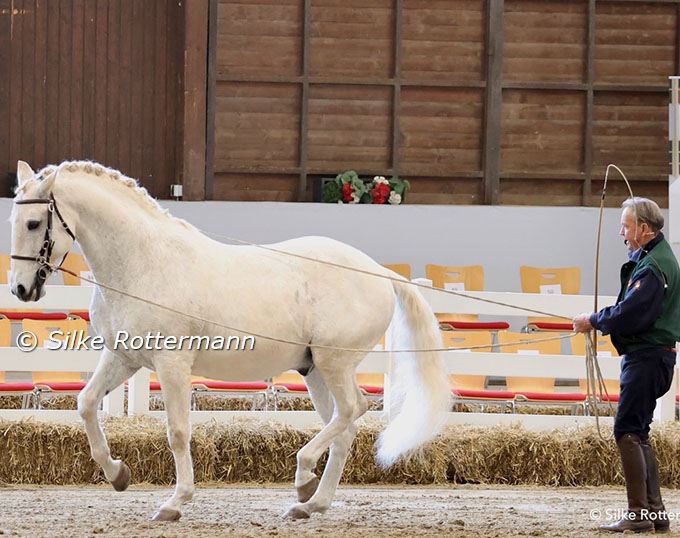
movements with just two lines and body language
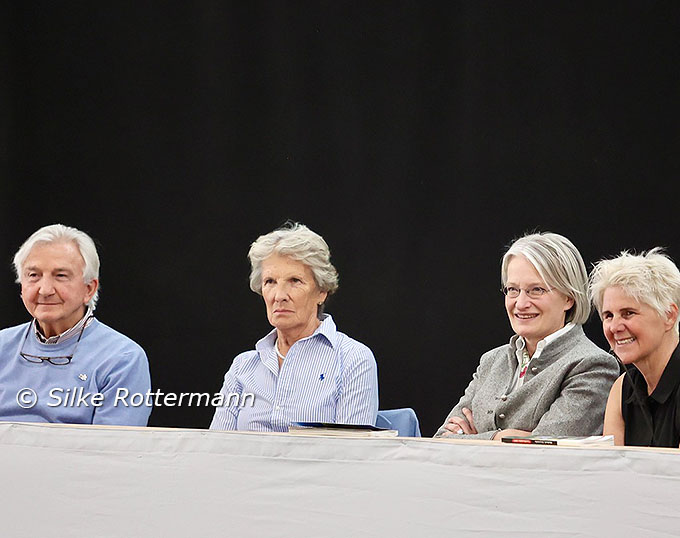
Nobody in Marbach’s indoor arena that afternoon knew this better than the former chief rider of the Spanish Riding School in Vienna, Arthur Kottas-Heldenberg, who followed the sensitive interplay between Schneider and his Lusitano stallion with great interest together. He sat with Martin Plewa’s wife Gabriele and Dr. Astrid von Velsen-Zerweck from the podium on the short side near the entrance.
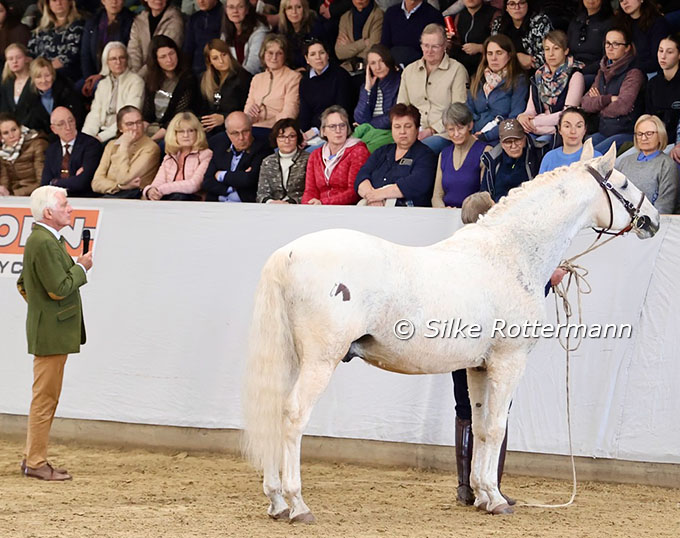
Just like with Uta Gräf’s very different San Diamond, this Lusitano stallion was „on“ in the best sense and he too seemed to enjoy presenting himself to an audience. What was presented wasn’t a tightrope walk, but a fine-tuned horse. When at the end of the presentation the audience had some questions, XL Do Pinheiro stood relaxed, with ears pricked and with a very interested face next to Schneider. He didn't move an inch in the many minutes his master spoke to the audience.
A Horse Living Up to His Name
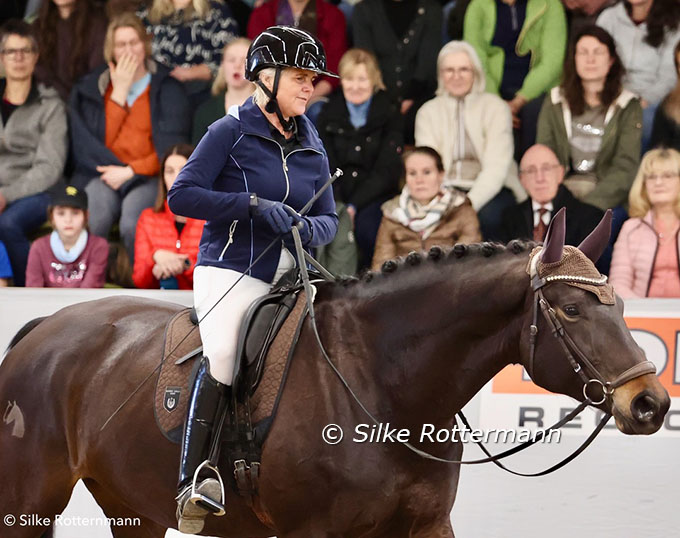
Uta Gräf’s second horse was not unknown to me as she had already shown him two weeks earlier at her Burgtagung event with Anja Beran: Herzenswunsch GE, an 8-year-old Westfalian gelding by the Trakehner Helium, who has been in her barn for less than a year.
She did not make a secret of it that this horse lives up to his name which translated means „Heart’s Desire“. Even a top rider like Gräf can only hope to have a horse of such quality and talent in her stable and she let everybody know when she introduced „Herzi“ las he is nick-named. „Herzi is extremely willing and cooperative. He always wants to make everything right," Gräf grinned from ear to ear.
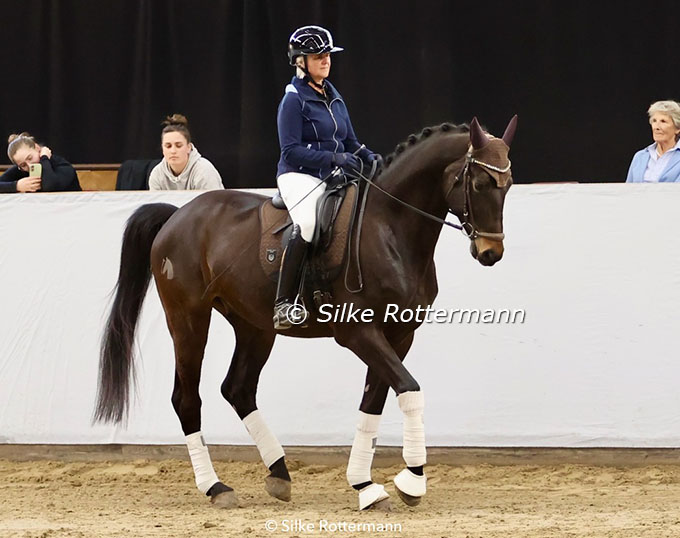
Perhaps not a spectacular sequence in itself, but very convincing was the transition from collected canter to medium canter and back. Herzenswunsch executed the transitions very softly and with great naturalness, while Gräf rode with her seat alone. This prompted Plewa to comment that „the horse is at the seat and legs, it moves independently from the hand, this is rideability“ and added „nowadays we often see horses showing a wrong rhythm in canter, are not parallel in trot, and peacocky (parade) in walk. The reason is always the same: A lack of relaxation (losgelassenheit). In contrary to this Uta’s horse is exemplary with his natural gaits.“
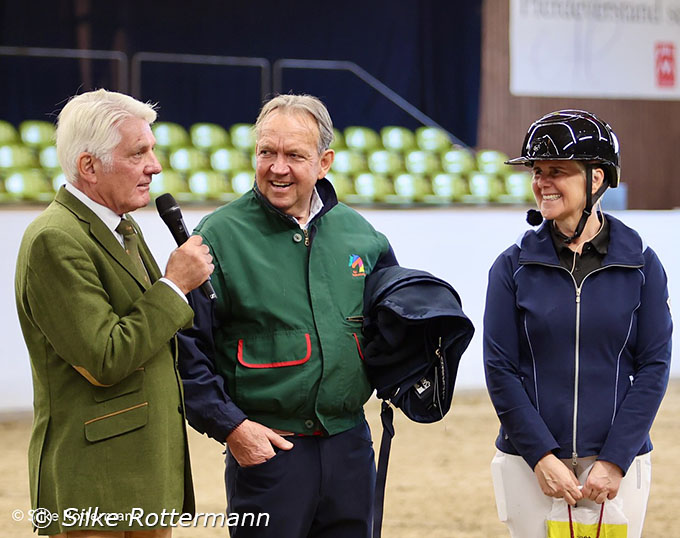
Martin Plewa was in unison with that: „to reward a horse after something well done corresponds 100% with the learning theory of horses.“ He stressed that it is the obligation and responsibility of the rider to be aware which exercise he can ask and take care that this exercise is successful. "Not the rider, but the exercise schools a horse," he smiled.
Conclusion
"Train and gymnastizise horses with lightness“ was the title of this seminar and it could not have been more appropriately named. The relaxation, the contentment, and intrinsic motivation each of the presented horses expressed, spoke volumes about their training. It was balm to the eye and soul of those who do not get blinded by tense steps of suspension or flying front-legs.
-- Article by Silke Rottermann (with the help of Ivana Volken) - Photos by Silke Rotterman
Related Links
2012 Xenophon Clinic in Neuwied: When Riding Becomes Art
Inspiring Xenophon Seminar in Münster
Christine Stuckelberger to Retire from Xenophon
Xenophon Society Admonishes New FEI Steward Guidelines
Susanne Miesner Elected Vice President Xenophon Society, Replacing Dr. Heuschmann
Xenophon Society Appeals to the German Equestrian Federation on Blood Rule
Diversity and Lightness, Essential for the Development of the Horse
2009 Classical Sales Warendorf Seminar: Riding and Dancing
2008 Xenophon Clinic in Marbach